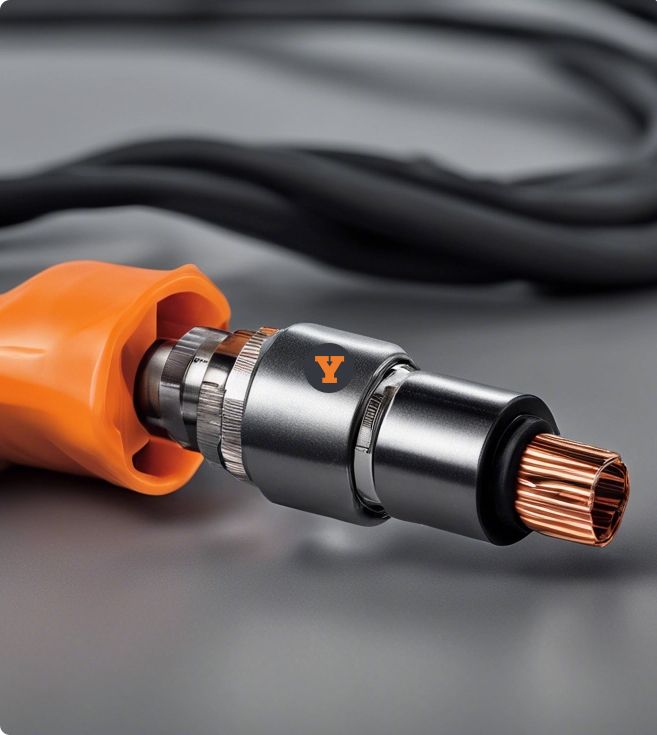
Selecting the correct flexible metal conduit connector is just as important as choosing the conduit itself. Even a high-quality metal conduit can fail to provide reliable cable protection if its connector has the wrong dimensions, thread type, or sealing design.
For electrical contractors, industrial equipment manufacturers, and bulk buyers, mismatched conduit fittings can cause loose connections, water ingress, installation delays, and additional maintenance costs.
A reliable connection requires compatibility between the conduit, fitting, and equipment enclosure.
This guide explains how to match flexible metal conduit with the correct connector based on conduit construction, dimensions, threads, environmental conditions, and installation requirements.
Why Is Connector Compatibility Important?
Flexible metal conduit connectors secure the conduit to electrical enclosures, control panels, motors, and industrial equipment.
A properly matched connector provides mechanical retention, helps protect enclosed wiring, and may contribute to environmental sealing and electrical bonding when designed for those purposes.
Incorrect matching can result in several problems:
Loose conduit connections caused by unsuitable clamping dimensions.
Water or dust entering through improperly sealed terminations.
Damaged conduit jackets from excessive compression.
Installation problems caused by incompatible threads.
Inadequate electrical continuity where metallic bonding is required.
The correct connector must match both the conduit end and the equipment entry point.
Explore available conduit connectors and fittings to understand the different connection configurations.
Step 1: Identify Your Flexible Metal Conduit Type
Different conduit constructions require different connector engagement and retention methods.
Galvanized Flexible Metal Conduit
Unjacketed galvanized flexible metal conduit normally features an interlocked metal structure.
Its connector must properly engage and retain the metallic conduit without damaging the construction.
Depending on the design, suitable fittings may use threaded engagement, clamping mechanisms, or other approved retention methods.
PVC-Coated Flexible Metal Conduit
PVC-coated flexible metal conduit includes an external protective jacket over its metal core.
Connectors for these products must accommodate the jacket dimensions and provide suitable mechanical retention.
For liquidtight applications, the connector must also include the appropriate sealing components.
A connector designed for unjacketed metal conduit should not automatically be used with a PVC-coated alternative.
Buyers can compare conduit constructions in the armored flexible conduits category.
Step 2: Match the Connector to the Conduit Size
Connector size is frequently the first specification checked during purchasing, but nominal dimensions alone are not sufficient.
A conduit identified as 1/2 inch does not necessarily have an actual outside diameter of 12.7 mm.
Trade sizes, metric designations, and finished outside diameters follow different dimensional conventions.
Important Dimensions to Verify
| Dimension | Why It Matters |
|---|
| Nominal conduit size | Identifies the specified conduit category |
| Conduit outside diameter | Determines connector fit |
| Jacket thickness | Affects compatibility with coated conduit |
| Connector engagement range | Ensures proper mechanical retention |
| Connector internal opening | Must accommodate the cable path |
| Thread dimensions | Must match the enclosure entry |
For example, a connector may be designed for a particular 16 mm conduit construction but require a G1/2 threaded enclosure connection.
These are two separate compatibility requirements.
Never assume that the conduit size and connector thread size must have identical numerical values.
Always consult the manufacturer's dimensional drawings and conduit compatibility tables.
Step 3: Choose the Correct Connector Thread Type
Conduit connectors commonly use Metric, PG, NPT, or G threads.
These thread systems are not automatically interchangeable.
| Thread type | Description | Typical applications |
|---|
| Metric (M) | ISO metric thread designation | Industrial equipment and control panels |
| PG | Panzergewinde thread system | Existing industrial equipment |
| NPT | Tapered pipe thread system | North American industrial equipment |
| G | Parallel pipe thread system | Machinery and industrial connections |
Metric vs NPT vs G Threads
Metric threads are commonly specified using designations such as M20 × 1.5.
NPT uses a tapered thread profile, while G threads are parallel and generally require an appropriate sealing method where water resistance is necessary.
Even if two threads have similar outside diameters, their profiles and pitches may differ.
Attempting to force incompatible threads together can damage connectors, compromise sealing, and weaken mechanical retention.
When equipment openings and connector threads differ, suitable thread adaptors, reducers, and enlargers may provide a solution.
Any adaptor must also satisfy the environmental, mechanical, and electrical requirements of the complete installation.
Step 4: Select Straight, 45°, or 90° Conduit Connectors
Connector orientation influences installation space, conduit routing, and mechanical stress.
Straight Conduit Connectors
Straight connectors are suitable when the conduit approaches an enclosure along a relatively direct path.
They are commonly used for electrical cabinets, machinery connections, and control panels where sufficient clearance is available.
45° Conduit Connectors
A 45° connector helps redirect conduit routing without requiring an immediate sharp bend.
This configuration can be useful when equipment layout restricts the available installation angle.
For example, the DWJ Series 45° Metal Hose Connector provides an angled connection option with published conduit compatibility and G-thread dimensions.
90° Conduit Connectors
Right-angle connectors are useful where the conduit must enter an enclosure from a perpendicular direction.
However, the complete assembly must maintain the cable's minimum bending radius.
A 90° connector should not be selected solely to save space if it creates excessive cable bending or installation stress.
Step 5: Match the Connector's IP Rating to the Environment
Environmental sealing is particularly important for flexible metal conduit used around industrial machinery.
For dry indoor applications, a suitable mechanical connection may be sufficient where permitted by the installation requirements.
For wet, dusty, or contaminated environments, additional sealing performance may be required.
| Protection rating | General protection |
|---|
| IP54 | Limited dust ingress and splashing water |
| IP65 | Dust-tight and protected against water jets |
| IP67 | Dust-tight and protected against temporary immersion under specified conditions |
| IP68 | Dust-tight and protected against immersion under manufacturer-specified conditions |
A connector's advertised IP rating does not automatically establish the protection level of the complete conduit assembly.
The final performance depends on the conduit construction, sealing components, enclosure interface, and installation quality.
For wet installations, confirm the protection rating of the complete conduit-and-connector combination rather than relying only on the fitting's specification.
Step 6: Consider Connector Material and Electrical Bonding
Connector materials should be selected according to mechanical loads and environmental exposure.
Metal fittings are commonly considered for industrial metallic conduit systems, particularly where mechanical strength and electrical continuity are important.
Corrosion-resistant materials may be necessary for outdoor installations, chemical processing equipment, or humid environments.
Polymer connectors can also be useful for compatible conduit systems, but they should not automatically replace metallic connectors when electrical bonding through the fitting is required.
Under applicable electrical installation rules, metallic raceway systems may be permitted to serve as equipment grounding paths only under specified conditions.
Where an independent equipment grounding conductor is required, it must be installed accordingly.
Projects with vibration or repeated equipment movement should also verify connector retention performance and mechanical stability.
Practical Example: Matching a Metal Conduit to Its Connector
Consider an industrial machine requiring a nominal 16 mm metal flexible conduit connection to an electrical enclosure.
The initial specification includes:
| Requirement | Example |
|---|
| Conduit | Nominal 16 mm metal flexible conduit |
| Enclosure thread | G1/2 |
| Connector orientation | 45° |
| Environmental requirement | IP65-rated assembly required |
| Installation | Stationary industrial machinery |
A published DWJ 45° connector specification identifies a 15(16) mm suitable metal conduit size with a G1/2 thread option.
This provides a possible starting point for selection.
However, the buyer must still verify actual conduit dimensions, connector retention, enclosure sealing, and the required IP performance of the completed assembly.
A matching nominal size alone is not sufficient proof of compatibility.
Common Mistakes When Matching Flexible Conduit Connectors
Choosing a Connector Based Only on Thread Size
A connector may fit the enclosure but not the conduit itself.
Check both connection interfaces independently.
Using Unjacketed Conduit Fittings for Coated Conduit
The PVC jacket changes the outside dimensions and may require a different sealing mechanism.
Select fittings specifically compatible with the coated conduit construction.
Assuming All IP65 Connectors Provide Waterproof Installations
A properly rated connector cannot compensate for an unsuitable conduit or incorrect installation.
Evaluate the entire cable protection assembly.
Ignoring Cable Bend Radius
Angled connectors can simplify equipment routing, but they must not create bends tighter than the cable or conduit manufacturer's specified limits.
Conduit Connector Selection Checklist for Bulk Buyers
Before requesting a quotation, prepare the following technical information:
| Specification | Required information |
|---|
| Conduit construction | Galvanized, PVC-coated, or other |
| Conduit size | Nominal designation and actual outside diameter |
| Connector type | Straight, 45°, or 90° |
| Thread specification | Metric, PG, NPT, or G |
| Material | Required metal or polymer grade |
| Environmental protection | Required IP rating and exposure conditions |
| Installation | Static, vibration-exposed, or moving |
| Compliance | Applicable standards, approvals, and bonding requirements |
| Procurement | Quantity, packaging, and delivery requirements |
For large OEM orders, requesting matched conduit and connector samples can help identify compatibility problems before mass procurement.
Frequently Asked Questions
Can I use any connector with flexible metal conduit?
No. The connector must match the conduit construction, dimensions, and installation requirements. Not all fittings provide suitable retention or sealing.
Does a 1/2-inch conduit require a 1/2-inch connector thread?
Not necessarily. Conduit trade size and enclosure thread size describe different interfaces. Always consult the connector's compatibility chart.
Do PVC-coated flexible conduits require special connectors?
They generally require fittings designed for their particular jacket and metal-core construction. Liquidtight applications also require suitable sealing components.
Can a nylon connector replace a metal conduit connector?
Only when the specific connector is approved and compatible with the conduit system and all electrical requirements are satisfied, including any necessary bonding or grounding arrangements.
What should buyers verify before placing bulk orders?
Confirm conduit dimensions, connector engagement, thread compatibility, environmental ratings, material requirements, certifications, and installation instructions.
Conclusion: Choose Connectors as Part of the Complete Conduit System
Matching flexible metal conduit with the correct connector requires evaluating more than nominal size.
Conduit construction, outside diameter, thread compatibility, connector orientation, environmental sealing, and electrical requirements must all be considered.
For industrial installations, selecting compatible conduit and fittings as a complete system can reduce installation problems, improve reliability, and prevent unnecessary replacement costs.
Get Compatible Flexible Metal Conduit and Connector Solutions
YDT provides flexible metal conduit and conduit connector solutions for industrial cable protection, with support for size matching, thread selection, customized configurations, and bulk purchasing.
Share your conduit specifications, enclosure requirements, and order quantity with YDT to receive suitable product recommendations and quotation support.
Contact YDT for Connector Selection and a Quote