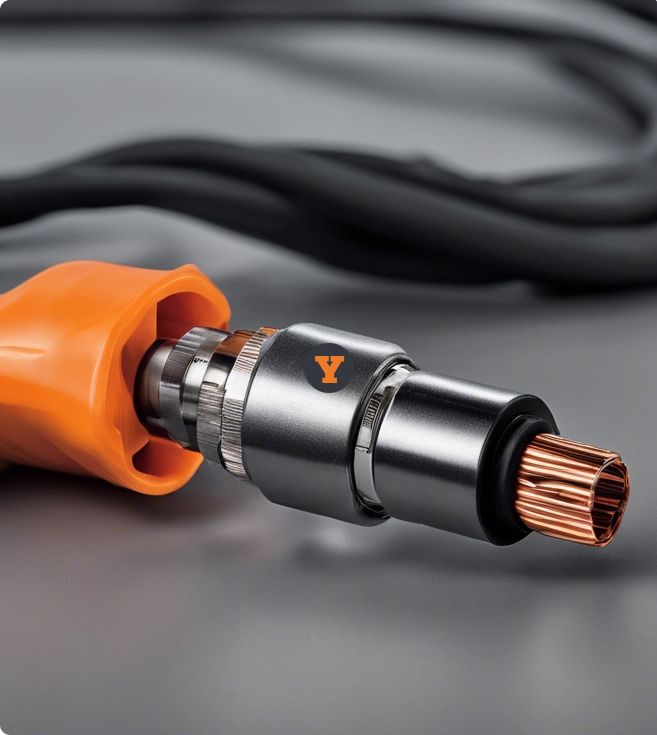
Regional Standards Impacting Stainless Steel Cable Gland Selection in Europe & Asia
In today’s globalized industrial supply chain, selecting stainless steel cable glands is no longer just a matter of size, material, or price. For procurement teams, engineers, and OEM manufacturers operating across multiple regions, compliance with regional standards has become a decisive factor.
Europe and Asia, as two of the world’s largest industrial markets, each enforce distinct regulatory frameworks, certification systems, and technical preferences. Failing to align with these standards can lead to project delays, rejected shipments, compliance violations, or costly redesigns.
This article provides a comprehensive, practical analysis of how regional standards in Europe and Asia impact stainless steel cable glands selection—and how buyers can navigate these requirements efficiently.

1. Why Regional Standards Matter in Cable Gland Selection
Cable glands serve critical roles in:
Because of these functions, they are tightly regulated components. Different regions impose specific requirements related to:
For companies sourcing globally or exporting equipment, standard compliance is not optional—it is a market entry requirement.
2. European Standards and Requirements
Europe has one of the most structured and strictly enforced regulatory environments for electrical components.
2.1 CE Marking and EU Directives
To be sold within the European Economic Area (EEA), cable glands must comply with applicable EU directives and carry the CE marking.
Key directives include:
CE marking indicates that the product meets:
Safety requirements
Environmental standards
Performance expectations
2.2 ATEX Certification (Hazardous Areas)
For industries such as oil & gas, mining, and chemical processing, ATEX certification is mandatory.
ATEX (Atmosphères Explosibles) defines requirements for equipment used in explosive atmospheres.
Cable gland implications:
Must prevent flame propagation
Require barrier sealing in many cases
Must withstand pressure and temperature extremes
Key Considerations:
Equipment category (Zone 0, 1, 2 / Zone 20, 21, 22)
Gas vs dust environments
Certification documentation and traceability
2.3 IEC Standards (Widely Adopted in Europe)
Although international, IEC standards are heavily adopted across Europe.
Relevant standards include:
These define:
Mechanical strength
Sealing performance
Environmental resistance
2.4 Metric Thread Dominance
Europe strongly favors metric threads (ISO standard) for cable glands.
Implications:
Enclosures are typically pre-threaded with metric entries
Accessories (locknuts, washers) are standardized
Easier integration across EU markets
Using non-metric threads (e.g., NPT) may:
2.5 Material and Environmental Compliance
European regulations also emphasize environmental responsibility:
RoHS (Restriction of Hazardous Substances)
REACH (Registration, Evaluation, Authorisation and Restriction of Chemicals)
Cable gland materials must:
3. Asian Standards and Market Variations
Asia is not a single regulatory environment—standards vary significantly by country. However, several patterns can be identified.
3.1 China: GB Standards and CCC Certification
In China, cable glands may need to comply with:
Key Characteristics:
Increasing alignment with IEC standards
Strong focus on safety and quality inspection
Documentation and testing required for large projects
Metric threads are widely used, consistent with global practices.
3.2 Japan: JIS Standards
Japan follows JIS (Japanese Industrial Standards), which often align with IEC but may include local adaptations.
Key Considerations:
High precision requirements
Strict quality expectations
Preference for reliable, long-life components
Metric threading is standard, but:
3.3 Southeast Asia: Mixed Standards
Countries such as Singapore, Malaysia, Thailand, and Indonesia often adopt a combination of:
Implications:
3.4 India: BIS Standards
India uses BIS (Bureau of Indian Standards), with increasing adoption of IEC guidelines.
Key Points:
Metric threads are standard
Certification requirements depend on application
Growing demand for compliant, export-quality components
4. Explosion-Proof Certification: ATEX vs IECEx
One of the most critical differences between Europe and Asia lies in hazardous area certification.
4.1 ATEX (Europe)
4.2 IECEx (International / Asia)
Widely accepted in Asia-Pacific
Not always legally mandatory, but highly preferred
Easier for global projects
4.3 Practical Selection Strategy
For manufacturers targeting both regions:
5. IP Rating Expectations Across Regions
Both Europe and Asia rely on IEC 60529 for IP ratings, but expectations vary by application.
Common Requirements:
IP65: Basic industrial use
IP67: Outdoor or temporary immersion
IP68: Continuous water exposure
Regional Differences:
Insight:
In export projects, always design for the highest required IP level to ensure compatibility across markets.
6. Thread Type Preferences by Region
| Region | Preferred Thread Type | Notes |
|---|
| Europe | Metric (ISO) | Mandatory in most applications |
| China | Metric | Aligns with global standards |
| Japan | Metric | High precision required |
| Southeast Asia | Metric / BSP | Mixed legacy systems |
| India | Metric | Increasing IEC alignment |
7. Material Selection Under Regional Standards
7.1 Stainless Steel Grade Requirements
SS304: General industrial environments
SS316: Marine, chemical, and corrosive environments
7.2 Europe vs Asia Expectations
Europe:
Strong emphasis on corrosion resistance
Preference for SS316 in harsh environments
Full material traceability required
Asia:
Requirements vary by industry
High-end markets (Japan, Singapore) expect premium materials
Cost-sensitive markets may accept SS304
8. Documentation and Certification Challenges
One of the biggest obstacles in international procurement is documentation.
Europe Requires:
Asia May Require:
Best Practice:
Always request:
Technical datasheets
Certification copies
Test reports
Material certificates
9. Common Mistakes in Cross-Regional Projects
9.1 Ignoring Local Thread Standards
Leads to installation issues and rework.
9.2 Using Non-Certified Products in Regulated Markets
Results in project rejection or legal risks.
9.3 Underestimating Documentation Requirements
Delays approvals and customs clearance.
9.4 Selecting Based on Price Alone
Low-cost products may fail compliance checks.
10. Practical Selection Workflow for Global Buyers
To ensure compliance across Europe and Asia:
Identify target market(s)
Confirm required certifications (CE, ATEX, IECEx, etc.)
Select compatible thread type (primarily metric)
Define IP rating based on environment
Choose appropriate stainless steel grade
Verify supplier documentation and test reports
Standardize specifications across projects when possible
11. Future Trends in Regional Standard Alignment
Increasing global adoption of IEC standards
Greater overlap between ATEX and IECEx
Growing demand for dual-certified products
Stronger environmental compliance requirements
For buyers, this means:
12. Final Thoughts
Selecting stainless steel cable glands for Europe and Asia requires more than technical knowledge—it demands a clear understanding of regulatory environments, certification systems, and regional preferences.
By prioritizing compliance, standardization, and proper documentation, companies can:
Reduce project risks
Improve installation efficiency
Ensure long-term reliability
Simplify global sourcing strategies
In an increasingly interconnected industrial landscape, the ability to navigate regional standards is not just an advantage—it is a necessity.
YDT provides globally compliant stainless steel cable gland solutions engineered to meet European and Asian standards—helping you streamline certification, ensure reliability, and succeed in international industrial projects with confidence.