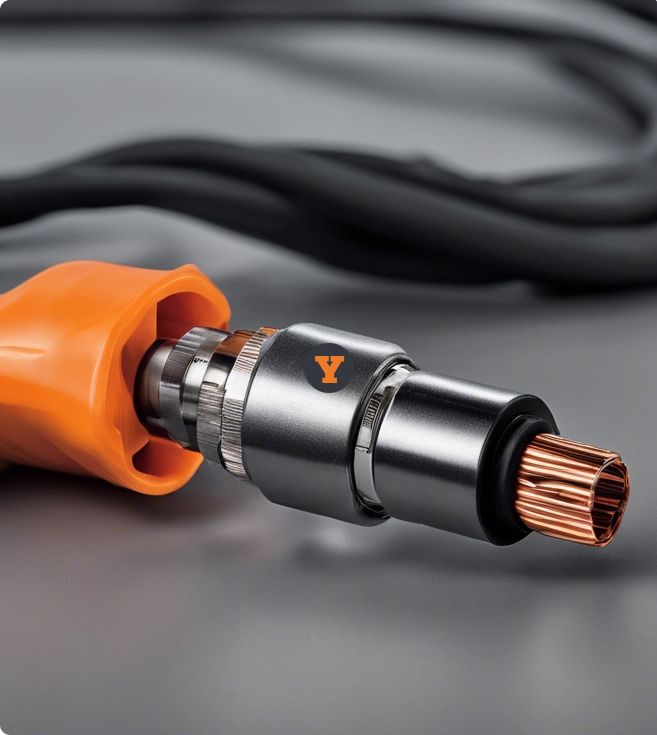
When selecting nylon cable glands, buyers often focus first on cable diameter, IP rating, material, or gland size. However, one specification can determine whether the cable gland can be installed at all: the thread type.
Metric, PG, and NPT are three common thread systems used for cable glands. They may look similar in a product catalog, and some sizes may even appear close in diameter, but they are not the same.
Choosing the wrong thread can cause:
Difficulty installing the cable gland
Loose or unstable mounting
Thread damage
Poor sealing at the enclosure
Increased installation time
Additional adapters or modifications
Incorrect replacement parts
Delays during equipment assembly
For OEM manufacturers, panel builders, machinery companies, electrical distributors, and maintenance teams, understanding the difference between Metric vs PG vs NPT nylon cable glands is therefore essential.
This guide explains how each thread type works, where it is commonly used, how to identify the correct option, and what buyers should check before placing an order.
What Is the Thread on a Nylon Cable Gland?
The threaded section of a cable gland is the part used to mount the gland into an electrical enclosure, junction box, control panel, machine housing, or other equipment.
Depending on the installation, the gland may:
Screw directly into a threaded hole
Pass through a clearance hole and be secured with a locknut
Connect through an adapter or reducer
The thread specification determines whether the gland is mechanically compatible with the mounting point.
It is important to distinguish this from the cable clamping range.
For example:
M20 × 1.5 describes the mounting thread.
A separate specification such as:
Cable range: 6–12 mm
describes the cable diameters the gland can grip.
These two specifications serve different purposes.
When purchasing nylon cable glands, you normally need to confirm both.
Metric vs PG vs NPT at a Glance
Before examining each thread in detail, the following comparison provides a useful overview.
| Feature | Metric | PG | NPT |
|---|
| Typical designation | M20 × 1.5 | PG13.5 | 1/2" NPT |
| Basic system | Metric | German-origin PG system | American tapered pipe thread |
| Thread form | Usually parallel | Parallel | Tapered |
| Common in new industrial equipment | Very common | Less common in new designs | Common in North American equipment |
| Common in older machinery | Yes | Very common | Yes |
| Easy to identify from number alone | Relatively | Requires PG chart | Requires NPT specification |
| Can directly replace other thread systems? | No | No | No |
| Typical applications | Automation, panels, machinery, lighting | Legacy European machinery, existing equipment | North American machinery and electrical systems |
The most important rule is:
Do not select a replacement cable gland based only on visual similarity.
Always identify the actual thread standard.
1. What Are Metric Nylon Cable Glands?
Metric nylon cable glands use metric thread dimensions.
A typical designation may look like:
M20 × 1.5
In this specification:
“M” indicates a metric thread
“20” refers to the nominal thread diameter in millimeters
“1.5” refers to the thread pitch in millimeters
Common metric cable gland sizes include:
M12
M16
M18
M20
M22
M25
M27
M32
M36
M40
M50
M63
Available sizes depend on the manufacturer and product series.
Metric cable glands are widely used in modern electrical and industrial equipment because metric dimensions are already common in mechanical engineering, enclosure design, and equipment manufacturing.
Where Are Metric Cable Glands Commonly Used?
Metric nylon cable glands are frequently found in:
Electrical control panels
PLC cabinets
Industrial automation equipment
Machinery
Junction boxes
LED lighting systems
Solar equipment
Telecommunications cabinets
Motor control systems
Sensors and instrumentation
Power distribution equipment
Building electrical installations
For a new industrial equipment design, Metric is often one of the easiest thread systems to standardize across multiple enclosure sizes.
Advantages of Metric Nylon Cable Glands
Metric cable glands provide several practical benefits.
Easy Integration With Modern Equipment
Many modern enclosures, machine drawings, and industrial components already use metric dimensions.
This simplifies design and sourcing.
Wide Range of Sizes
Metric nylon cable glands are available in small and large sizes for different cable diameters.
Easy Specification
A designation such as M20 × 1.5 provides useful dimensional information directly.
Suitable for Global Equipment Manufacturing
Metric specifications are commonly understood across many international industrial markets.
For OEM manufacturers supplying equipment globally, standardizing around metric gland sizes can simplify documentation and spare parts management.
2. What Are PG Nylon Cable Glands?
PG stands for Panzergewinde, a thread system historically used for electrical conduits and cable entry components.
Common PG cable gland sizes include:
PG7
PG9
PG11
PG13.5
PG16
PG19
PG21
PG25
PG29
PG36
PG42
PG48
One important difference from Metric is that the number in a PG designation does not directly represent the outside thread diameter in millimeters.
For example:
PG13.5 does not mean a 13.5 mm thread diameter.
This is one reason buyers should use an actual PG dimensional chart rather than trying to interpret the number as a metric measurement.
Where Are PG Cable Glands Commonly Used?
PG cable glands are frequently encountered in:
Older European machinery
Existing industrial equipment
Control cabinets
Legacy automation systems
Older junction boxes
Replacement and maintenance projects
Equipment originally designed around PG threaded entries
Although many new designs now use metric threads, PG cable glands remain important because an enormous amount of existing industrial equipment is still in service.
For maintenance departments and spare-parts distributors, PG sizes therefore remain relevant.
When Should You Choose PG?
Choose a PG nylon cable gland when:
The existing equipment drawing specifies PG
The enclosure already has a PG threaded hole
You are replacing an existing PG cable gland
The customer specifically requests a PG specification
The machine platform is standardized around PG threads
Do not automatically redesign an existing PG installation around Metric unless there is a clear engineering reason to do so.
For replacement work, matching the existing thread is usually the simplest solution.
3. What Are NPT Nylon Cable Glands?
NPT stands for National Pipe Thread and is widely associated with North American industrial applications.
Common NPT cable gland specifications may include:
1/4" NPT
3/8" NPT
1/2" NPT
3/4" NPT
1" NPT
1-1/4" NPT
1-1/2" NPT
A major difference between NPT and common Metric or PG cable gland threads is that NPT threads are tapered.
This means the thread diameter changes gradually along the threaded section.
As the gland is tightened into a matching female NPT thread, the taper creates increasing mechanical engagement.
Where Are NPT Cable Glands Commonly Used?
NPT nylon cable glands may be specified for:
North American electrical equipment
Industrial machinery
Control systems
Sensors and instrumentation
OEM equipment exported to the United States or Canada
Process equipment
Industrial enclosures designed around NPT ports
When a customer's technical drawing specifies NPT, the cable gland should generally follow the same standard.
Why NPT Sizes Can Be Confusing
A common sourcing mistake is assuming that the nominal inch designation equals the measured external diameter.
For example, someone may expect a 1/2" NPT thread to measure exactly 0.5 inch across.
That is not how nominal pipe thread sizing works.
For this reason, buyers should identify NPT threads by the actual standard, not by trying to convert the nominal fraction directly into a physical outside diameter.
4. Metric vs PG: What Is the Main Difference?
Metric and PG nylon cable glands are both commonly available with parallel threads, but their dimensions and pitch systems are different.
The biggest practical difference is compatibility.
A PG threaded hole is designed for a PG gland.
A metric threaded hole is designed for a metric gland.
Even where two sizes look similar, they should not be assumed interchangeable.
Consider an existing electrical enclosure where the current gland is PG13.5.
A maintenance technician may notice that an M20 gland looks approximately similar and try to use it as a replacement.
Possible problems include:
Thread starts but binds
Gland does not screw in fully
Thread becomes damaged
Mechanical holding strength is reduced
Sealing washer does not seat correctly
The correct approach is to identify the original thread before choosing the replacement.
5. Metric vs NPT: Parallel vs Tapered Threads
One of the most important distinctions between Metric and NPT cable glands is the thread geometry.
Many metric cable glands use parallel threads.
NPT uses a tapered thread.
This affects how the gland engages with the mounting hole.
A parallel-thread gland generally maintains a consistent thread diameter along its threaded section.
An NPT gland becomes progressively tighter as it is screwed into the matching tapered port.
Because of this structural difference, you should not treat an NPT gland and a similarly sized metric gland as interchangeable.
Even when their approximate outside diameters appear close, the thread form and sealing behavior are different.
6. PG vs NPT: Which Should You Use?
PG and NPT generally appear in different equipment traditions.
PG is strongly associated with older European electrical systems and legacy machinery.
NPT is commonly associated with North American industrial equipment and pipe-thread-based connections.
For most buyers, the choice is not about which thread is “better.”
It is about which thread matches:
The thread should be treated as an interface requirement rather than a standalone performance feature.
7. Can Metric, PG, and NPT Cable Glands Be Interchanged?
Generally, no.
Metric, PG, and NPT are different thread systems.
Even if two glands appear to have similar outside dimensions, they may differ in:
Major diameter
Minor diameter
Thread pitch
Thread angle
Thread profile
Taper
Attempting to force an incorrect thread into an enclosure can damage both components.
For mass-production equipment, it can also create inconsistent assembly quality.
If you need to change from one thread system to another, a correctly engineered thread adapter or reducer may sometimes be used.
However, the adapter itself should be selected according to:
8. Which Thread Type Is Best for New Equipment?
For a completely new product or equipment platform, the manufacturer has more flexibility.
In many cases, Metric is a practical choice because it integrates easily into modern metric-based enclosure designs.
However, the correct choice depends on the destination market and customer requirements.
Consider Metric If:
Your machine uses metric mechanical dimensions
Your enclosures use metric holes
Your suppliers use metric components
You sell into multiple international markets
You want a straightforward modern standard
Consider NPT If:
The equipment is primarily designed for North American customers
Customer drawings require NPT
Other equipment ports already use NPT
Spare parts must match an existing North American system
Consider PG If:
You are maintaining an existing PG-based product platform
Your customer specifically requests PG
You are manufacturing replacement parts for older equipment
For new designs, standardization is usually more valuable than mixing multiple thread types without a clear reason.
9. Which Thread Type Should You Choose for Replacement Cable Glands?
Replacement applications should normally start with the original equipment.
Before ordering, determine:
What thread is currently installed?
What size is it?
What cable diameter is being used?
What thread length is required?
What environmental protection is required?
If the existing gland still has a readable marking, identification may be simple.
For example:
If markings are unavailable, check the equipment documentation.
Dimensional measurement can help, but measuring only the thread outside diameter may not be enough to distinguish similar-looking standards.
Thread pitch and geometry may also need to be identified.
10. How to Identify an Unknown Cable Gland Thread
Maintenance teams often need to replace a gland without an original drawing.
A systematic identification process is helpful.
Step 1: Look for Markings
Check the gland body, locknut, enclosure, or equipment documentation.
Search for markings such as:
This is the easiest method.
Step 2: Measure the Thread Diameter
Use a suitable caliper to measure the external thread diameter.
This narrows down the possible sizes.
However, diameter alone does not confirm the thread standard.
Step 3: Measure the Thread Pitch
A thread pitch gauge can help distinguish between similar threads.
For Metric, pitch is normally expressed in millimeters.
NPT is normally identified using threads per inch.
Step 4: Determine Whether the Thread Is Parallel or Tapered
This is particularly useful when identifying possible NPT threads.
A visible taper can indicate a pipe-thread type rather than a standard parallel metric cable gland thread.
Step 5: Compare With an Official Size Chart
Once approximate dimensions are known, compare them against Metric, PG, and NPT specifications.
Do not rely solely on visual judgment.
11. Thread Type Does Not Determine Cable Diameter
One of the biggest misconceptions in cable gland sourcing is that thread size and cable size have a fixed one-to-one relationship.
They do not.
For example, two M20 nylon cable glands may have different cable ranges.
Likewise, two PG13.5 models may use different sealing inserts.
Thread type answers:
How does the gland connect to the enclosure?
Cable clamping range answers:
What cable diameter can the gland grip and seal?
You need both specifications.
A complete request should look more like:
M20 × 1.5, cable range suitable for 8–12 mm cable
rather than simply:
M20 cable gland
12. Does Thread Type Affect IP Rating?
The thread standard itself does not automatically determine the IP protection level.
Metric, PG, and NPT nylon cable glands may all be designed for demanding sealing applications.
However, the installation interface matters.
For parallel-thread cable glands, a sealing washer or O-ring may help seal the interface between the gland and the enclosure.
For threaded installations, correct engagement is essential.
IP performance can be affected by:
Therefore, selecting the correct thread is part of achieving reliable environmental protection.
13. Should You Use a Locknut?
The mounting method determines whether a locknut is required.
Threaded Enclosure Hole
If the enclosure contains the correct female thread, the gland may screw directly into it.
Unthreaded Clearance Hole
If the gland passes through a plain hole, a locknut is typically used on the inside of the enclosure.
This arrangement is common with Metric and PG nylon cable glands.
Before ordering, confirm whether:
This is particularly important for distributors who resell complete gland kits.
14. What About Thread Length?
Thread type is not the only mounting consideration.
You must also check the thread length.
A gland can have the correct thread diameter and pitch but still be unsuitable if its threaded section is too short for the enclosure wall.
Standard-thread cable glands are usually suitable for common sheet-metal or thin-wall enclosures.
Long-thread nylon cable glands may be required for:
For these installations, specify both thread type and required thread length.
15. Application Examples: Choosing Between Metric, PG, and NPT
Example 1: New Automation Control Cabinet
Requirements:
Recommended direction:
Metric nylon cable glands
There is little reason to introduce PG or NPT when the complete cabinet is already designed around metric components.
Example 2: Replacing Cable Glands on an Older European Machine
Requirements:
Recommended direction:
PG nylon cable gland
Switching to Metric without modifying the mounting interface creates unnecessary complexity.
Example 3: Industrial Equipment for a U.S. Customer
Requirements:
Recommended direction:
1/2" NPT nylon cable gland
The customer's mechanical interface requirement should take priority.
Example 4: International OEM Offering Several Regional Versions
The manufacturer may maintain:
Metric version for general international markets
NPT version for specific North American customers
PG version for legacy replacement equipment
In this case, product configuration management becomes important.
Part numbers should clearly distinguish the thread systems to prevent assembly errors.
16. Common Mistakes When Selecting Cable Gland Threads
Mistake 1: Assuming Similar Diameter Means Compatibility
Two threads can have similar outside diameters while using different pitches or profiles.
Never choose based on visual similarity alone.
Mistake 2: Treating PG Numbers as Millimeters
PG13.5 does not mean a thread diameter of exactly 13.5 mm.
Use a PG thread chart.
Mistake 3: Treating NPT Nominal Size as Actual Diameter
A 1/2" NPT thread is not identified simply by measuring 0.5 inch across the outside.
Use the correct NPT specification.
Mistake 4: Forcing an Incorrect Thread
If a gland becomes difficult to screw into an enclosure after only a few turns, stop.
Forcing it can damage both threads.
Mistake 5: Converting PG to Metric Without Checking the Enclosure
A PG-to-Metric substitution may require a new hole, an adapter, or enclosure modification.
Mistake 6: Ordering Only by Thread Size
“M20” is not a complete cable gland specification.
The supplier also needs the cable OD or required clamping range.
Mistake 7: Forgetting Thread Length
A correct M25 gland may still fail to mount correctly if the enclosure wall is too thick for the available thread length.
17. How Distributors Should Stock Metric, PG, and NPT Cable Glands
For cable gland distributors, stocking strategy should reflect customer demand rather than treating every thread standard equally.
A practical inventory structure may separate products by:
Thread Family
Size
For example:
Cable Range
Each thread size may require multiple sealing ranges.
Special Features
Standard
Long thread
Spiral
Multi-hole
UV-resistant
Flame-retardant
This structure helps customers find the correct product faster and reduces the number of technical questions required before ordering.
18. What Information Should Be Included in an RFQ?
A professional cable gland inquiry should contain enough technical information for accurate selection.
At minimum, provide:
| Information | Example |
|---|
| Thread standard | Metric |
| Thread size | M20 × 1.5 |
| Cable OD | 9.5 mm |
| Required IP level | IP68 |
| Application | Outdoor control box |
| Quantity | 5,000 pcs |
Additional useful details include:
Nylon color
UV resistance
Flame-retardant requirements
Operating temperature
Standard or long thread
Locknut requirement
Sealing washer requirement
Spiral strain relief
Certification requirements
Packaging requirements
A detailed RFQ reduces the risk of receiving a quotation for a gland that fits the enclosure but not the cable.
19. Metric vs PG vs NPT Selection Checklist
Use the following checklist before ordering.
Choose Metric When:
The drawing specifies M thread
The enclosure uses metric holes
The equipment uses modern metric standards
You are designing a new machine around metric components
Choose PG When:
The drawing specifies PG
Existing equipment uses PG
You are supplying legacy replacement components
Your customer explicitly requires PG
Choose NPT When:
The drawing specifies NPT
The enclosure has tapered NPT threads
The equipment follows North American thread requirements
The customer specifically requires NPT
Then confirm separately:
Cable OD
Cable clamping range
IP requirement
Thread length
Material
Installation environment
20. A Practical Decision Process
If you are still unsure which thread to choose, use the following sequence.
Question 1: Is This a Replacement Part?
If yes, identify the existing thread and match it whenever practical.
If no, continue.
Question 2: Does the Customer Drawing Specify a Thread?
If yes, follow the drawing.
If no, continue.
Question 3: Is the Equipment Already Standardized Around One Thread System?
If yes, use the same system to simplify manufacturing.
If no, continue.
Question 4: Which Market Will the Equipment Serve?
Metric is commonly practical for international equipment.
NPT may be necessary for certain North American requirements.
PG is primarily relevant where existing designs or customers require it.
Question 5: What Cable Diameter Must Be Sealed?
Once the thread type is determined, select the correct clamping range separately.
This decision process prevents buyers from incorrectly treating thread type and cable diameter as one specification.
Frequently Asked Questions About Metric, PG, and NPT Cable Glands
What is the difference between Metric and PG cable glands?
Metric and PG use different thread dimensions and specifications. Although some sizes may appear similar, they are not automatically interchangeable.
What is the difference between Metric and NPT cable glands?
Metric cable glands commonly use parallel metric threads, while NPT uses tapered pipe threads. Their dimensions and thread geometry are different.
Can I replace PG13.5 with M20?
Not directly in every application. Although these sizes may appear relatively close, their thread specifications differ. Confirm the enclosure hole or use an appropriate adapter if the design allows it.
Can I use NPT in a metric threaded hole?
No. The thread systems are different. Use the thread specified for the enclosure.
Which cable gland thread is most common?
Metric cable glands are widely used in modern industrial equipment, while PG remains common in legacy installations and NPT is widely specified in North American equipment.
Is PG still used?
Yes. PG cable glands remain important for existing industrial machinery, control equipment, replacement parts, and projects designed around PG threaded entries.
Does M20 mean a 20 mm cable?
No. M20 refers to the mounting thread. Cable compatibility is determined by the cable clamping range.
Is 1/2" NPT the same as M20?
No. Even if dimensions appear close, NPT and Metric use different thread systems and are not direct equivalents.
Do Metric, PG, and NPT glands offer the same waterproof performance?
The thread type alone does not determine waterproof performance. Product design, sealing components, cable diameter, installation, and enclosure interface all affect ingress protection.
How can I identify an unknown cable gland thread?
Check product markings or drawings first. If these are unavailable, measure thread diameter, pitch, and whether the thread is tapered, then compare the results with the relevant thread standards.
Should I use Metric or PG for a new machine?
If there is no customer or legacy requirement, Metric is often a practical choice for modern equipment because it integrates well with metric-based machine and enclosure designs.
What information should I send a supplier if I am unsure?
Send the cable OD, enclosure hole or existing thread measurements, photos if available, application environment, required IP rating, and quantity. This provides enough information to narrow down the correct specification.
Final Thoughts: Choose the Thread Based on the Equipment, Not Appearance
There is no single thread system that is automatically better for every nylon cable gland application.
The correct choice depends primarily on the mechanical interface.
Metric cable glands are widely used in modern machinery, control panels, automation systems, electrical enclosures, and international equipment designs.
PG cable glands remain important for older machinery, existing European-style equipment, maintenance projects, and legacy installations.
NPT cable glands are commonly required for North American industrial equipment and other systems designed around tapered NPT threaded ports.
The most important purchasing principle is simple:
Match the thread to the enclosure first, then match the cable clamping range to the actual cable diameter.
Do not substitute Metric, PG, and NPT cable glands because they appear to be approximately the same size. Confirm the thread standard, thread size, cable OD, thread length, mounting method, IP requirement, and operating environment before ordering.
For equipment manufacturers, panel builders, distributors, and industrial buyers sourcing Metric, PG, or NPT Nylon Cable Glands, YDT can support product selection according to your actual cable diameter, enclosure thread, environmental requirements, and purchasing quantity. Send YDT your thread standard, thread size, cable OD, IP requirement, application, and order volume, and our team can help match the appropriate nylon cable gland specification for your project.