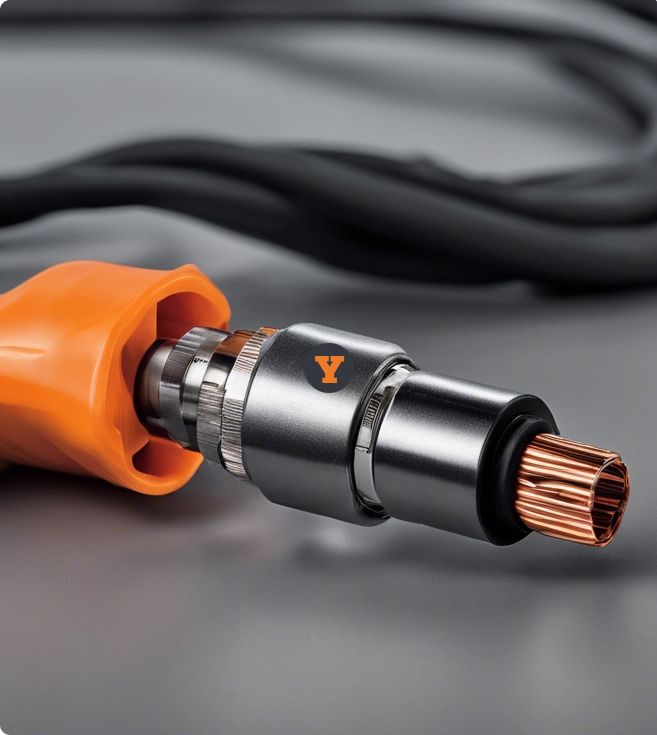
IP68 Brass Cable Gland vs IP67 Brass Cable Gland: Key Differences, Application Scenarios, and How to Choose the Right One
In industrial electrical systems, cable protection is a critical yet often underestimated factor affecting equipment safety, system reliability, and long-term operating costs. Among the many cable management components, brass cable glands are widely used due to their mechanical strength, corrosion resistance, and stable performance in harsh environments.
When sourcing brass cable glands, buyers frequently encounter two similar but often misunderstood options: IP67 brass cable glands and IP68 brass cable glands. At first glance, the difference seems minor—just one number apart. In reality, this difference represents distinct protection levels, application boundaries, and cost-performance considerations that directly impact project success.
This article provides a comprehensive, technical, and procurement-oriented comparison of IP67 vs IP68 brass cable glands, helping engineers, purchasing managers, and project contractors make informed decisions.
1. Understanding IP Ratings for Brass Cable Glands
Before comparing IP67 and IP68, it is essential to understand what an IP rating actually means.
The IP (Ingress Protection) rating, defined by IEC 60529, consists of two digits:
First digit (6): Protection against solid objects
“6” indicates dust-tight protection, meaning no dust ingress under vacuum conditions.
Second digit (7 or 8): Protection against water ingress
This is where IP67 and IP68 diverge.
Both IP67 and IP68 brass cable glands provide full dust protection. The key difference lies in water resistance performance.
2. What Is an IP67 Brass Cable Gland?
2.1 Definition and Water Protection Level
An IP67 brass cable gland is designed to withstand:
· Temporary immersion in water
· Typically up to 1 meter depth
· For a duration of up to 30 minutes
This means that under accidental or short-term exposure to water—such as rain, splashing, or brief flooding—the gland maintains its sealing integrity.
2.2 Structural Characteristics
Most IP67 brass cable glands feature:
· Nickel-plated brass body
· One or two sealing rings (usually NBR)
· Standard compression design
· Metric, PG, or NPT thread options
The sealing system is optimized for intermittent water exposure, not continuous submersion.
2.3 Typical Applications of IP67 Brass Cable Glands
IP67 brass cable glands are commonly used in:
· Electrical control panels
· Outdoor lighting systems
· Industrial automation cabinets
· Machinery exposed to wash-down or rain
· General outdoor installations
In these scenarios, water contact is predictable but not constant, making IP67 sufficient and cost-effective.
3. What Is an IP68 Brass Cable Gland?
3.1 Definition and Water Protection Level
An IP68 brass cable gland is designed for:
· Continuous immersion in water
· At depths specified by the manufacturer (often beyond 1 meter)
· For extended or indefinite periods
Unlike IP67, IP68 does not have a fixed test depth or time. Instead, performance depends on design quality, sealing materials, and manufacturing precision.
3.2 Enhanced Sealing Structure
IP68 brass cable glands typically include:
· Multi-layer sealing systems
· High-elasticity sealing materials (EPDM or silicone)
· Improved compression geometry
· Tighter tolerances between components
These features allow the gland to maintain sealing performance even under constant water pressure.
3.3 Typical Applications of IP68 Brass Cable Glands
IP68 brass cable glands are widely used in:
· Submersible pumps
· Marine and offshore equipment
· Underground cable systems
· Wastewater treatment plants
· Tunnels, ports, and coastal installations
· Renewable energy systems in extreme environments
In these applications, long-term water exposure is unavoidable, making IP68 a functional necessity rather than an upgrade.
4. IP67 vs IP68 Brass Cable Gland: Side-by-Side Comparison
4.1 Water Resistance Capability
· IP67: Short-term immersion, accidental water exposure
· IP68: Continuous immersion, high-moisture or submerged environments
4.2 Sealing Reliability Over Time
· IP67: Seals may degrade faster under permanent moisture
· IP68: Seals are engineered for long-term stability under pressure
4.3 Installation Tolerance
· IP67: More forgiving during installation
· IP68: Requires correct torque and cable diameter matching to maintain rated protection
4.4 Cost Considerations
· IP67: Generally more economical
· IP68: Higher upfront cost but reduces long-term failure risk
4.5 Maintenance and Replacement Frequency
· IP67: May require earlier inspection in wet environments
· IP68: Offers longer service intervals in harsh conditions
5. How to Choose Between IP67 and IP68 Brass Cable Glands
Choosing the right IP rating is not about selecting the “higher number,” but about matching protection level to actual operating conditions.
5.1 Key Questions Procurement Teams Should Ask
· Will the cable gland be fully submerged during operation?
· Is water exposure temporary or continuous?
· What is the installation environment (outdoor, underground, marine)?
· What are the failure consequences if water ingress occurs?
· Is long-term maintenance access limited?
5.2 When IP67 Is the Right Choice
Choose IP67 brass cable glands if:
· Water exposure is occasional
· The installation is above ground
· Budget control is a priority
· Equipment can be easily accessed for maintenance
5.3 When IP68 Is the Right Choice
Choose IP68 brass cable glands if:
· The gland will be submerged or exposed to standing water
· Equipment failure leads to high downtime costs
· The environment involves high humidity, salt spray, or pressure
· Long-term reliability outweighs initial cost
6. Common Misunderstandings About IP67 and IP68 Brass Cable Glands
6.1 “IP67 Is Enough for All Outdoor Use”
Not always. Outdoor does not automatically mean IP67 is sufficient—flood-prone or coastal areas often require IP68.
6.2 “IP68 Means Indestructible”
IP68 does not eliminate the need for:
· Proper installation
· Correct cable diameter selection
· Regular inspection in critical systems
6.3 “Higher IP Rating Always Means Better Value”
Over-specifying IP68 for dry environments can lead to unnecessary cost without functional benefit.
7. Final Thoughts: Making a Smart, Application-Driven Choice
The real difference between IP67 and IP68 brass cable glands is not just a test rating—it is about risk control, lifecycle cost, and operational reliability. Understanding where and how the cable gland will be used allows buyers to avoid both under-specification and over-specification.
By selecting the right protection level from the start, companies can reduce maintenance issues, prevent water-related failures, and ensure stable system performance throughout the equipment lifecycle.
YDT is committed to providing reliable brass cable gland solutions that help customers achieve safer installations, longer service life, and greater overall project value.