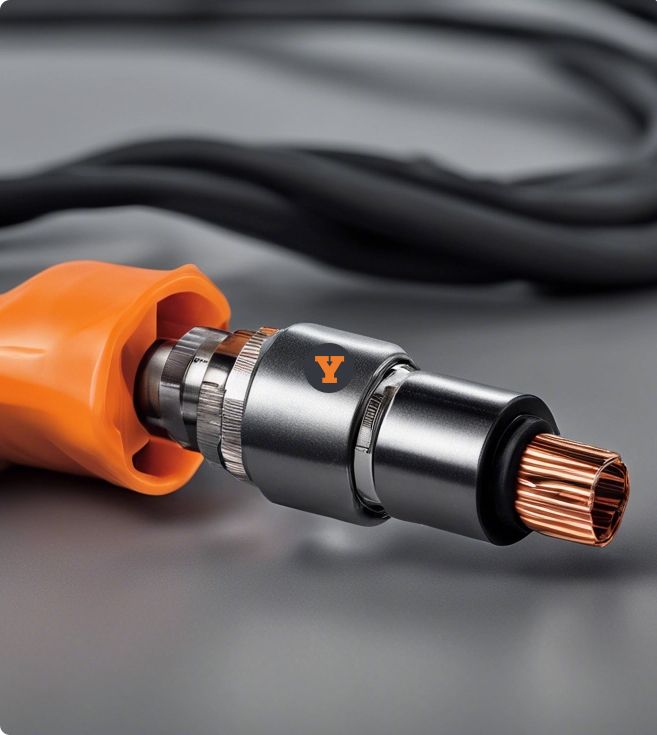
Choosing the correct flexible metal conduit size is essential for safe cable routing, efficient installation, and long-term electrical system reliability. An undersized conduit can make cable installation difficult, damage insulation, and create compliance problems. An unnecessarily large conduit increases material costs and requires more installation space.
For electrical contractors, equipment manufacturers, and industrial procurement teams, conduit sizing involves more than matching nominal pipe size to cable diameter.
This guide explains how to calculate conduit fill, determine the required internal diameter, account for bending requirements, and select compatible fittings for industrial wiring systems.
Why Is Flexible Metal Conduit Sizing Important?
Flexible metal conduit protects electrical cables against mechanical damage while allowing routing around equipment, machinery, and confined spaces.
However, incorrect sizing can create several problems:
Cable damage: Insufficient internal space increases friction and installation stress.
Difficult installation: Cables may become trapped during pulling, particularly around bends.
Heat management: Excessive conductor fill can contribute to thermal problems.
Connector incompatibility: Incorrect external dimensions may prevent secure fitting connections.
Higher costs: Oversized conduits require larger connectors and additional installation space.
The objective is to select the smallest suitable conduit that satisfies applicable fill requirements while providing adequate installation clearance.
Step 1: Identify Your Cable Diameter and Quantity
Before selecting conduit size, determine the dimensions of every cable or insulated conductor entering the conduit.
Important information includes conductor quantity, insulation type, cable outside diameter, and whether the installation contains individual conductors or multiconductor cables.
Cable Outside Diameter vs Conductor Size
A common mistake is using the conductor's cross-sectional area instead of its overall insulated diameter.
For example, a 2.5 mm² conductor describes the nominal electrical conductor cross-section, not the external dimensions of the insulated wire.
Different insulation materials can produce different outside diameters for conductors with the same nominal cross-sectional area.
Always obtain the actual insulated conductor diameter or cross-sectional area from the relevant technical specification.
For multiconductor cables, use the overall cable dimensions when the applicable installation rules require the cable assembly to be treated as one unit.
Step 2: Understand Conduit Fill Requirements
Conduit fill describes the percentage of the conduit’s internal cross-sectional area occupied by cables or conductors.
For installations governed by the US National Electrical Code (NEC), Chapter 9, Table 1 establishes the following general limits:
| Number of conductors or cables | Maximum fill |
|---|
| One | 53% |
| Two | 31% |
| Three or more | 40% |
These limits apply subject to the relevant NEC conditions and exceptions. Other countries and installation standards may use different requirements.
The conduit fill calculation is:
Conduit Fill (%) = Total Cable Cross-Sectional Area ÷ Conduit Internal Area × 100
For round conductors:
Area = π × (Outside Diameter ÷ 2)²
When calculating fill, account for insulation and applicable equipment grounding conductors.
The calculation should use the actual internal dimensions of the selected conduit rather than assuming that nominal trade size equals usable internal diameter.
Step 3: Calculate the Required Conduit Internal Diameter
Consider an industrial control system containing four insulated conductors, each with an outside diameter of 5 mm.
Calculate Total Conductor Area
Area of one insulated conductor:
π × (5 ÷ 2)² = 19.63 mm²
Total for four conductors:
4 × 19.63 = 78.52 mm²
Calculate Minimum Conduit Area
With a maximum allowable fill of 40%:
78.52 ÷ 0.40 = 196.30 mm²
The corresponding minimum theoretical internal diameter is approximately 15.8 mm.
Select a Practical Conduit Size
Suppose the selected metal conduit has a verified internal diameter of 18 mm.
Its internal area is approximately 254.47 mm².
Actual conductor fill:
78.52 ÷ 254.47 × 100 = 30.9%
This is below the 40% general fill limit.
However, the example is illustrative, not a universal recommendation for a particular trade size. Actual conduit dimensions, cable pulling conditions, applicable standards, and manufacturer tolerances must also be checked.
For industrial projects, compare the calculated requirements with the technical specifications in the armored flexible conduits range.
Step 4: Understand Nominal Conduit Sizes
Flexible metal conduits are commonly identified by metric or imperial trade sizes.
| Common nominal size | Approximate nominal conversion |
|---|
| 3/8 inch | 9.5 mm |
| 1/2 inch | 12.7 mm |
| 3/4 inch | 19.1 mm |
| 1 inch | 25.4 mm |
| 1-1/4 inch | 31.8 mm |
Important: These conversions do not represent guaranteed conduit internal diameters.
Actual internal dimensions depend on the manufacturing standard, metal construction, wall thickness, and conduit design.
A PVC-coated metal conduit may also have a larger external diameter than an uncoated conduit with a comparable metal core.
For accurate sizing, request three dimensions: nominal trade size, minimum internal diameter, and external diameter.
This prevents specification errors when comparing products from different suppliers.
Step 5: Consider Bend Radius and Cable Pulling
Correct conduit fill does not automatically guarantee easy cable installation.
Flexible metal conduit is frequently used around machinery, motors, electrical cabinets, and equipment connections where multiple bends may be necessary.
The installation must satisfy both the conduit manufacturer's minimum bend radius and the cable manufacturer's bending requirements.
A tight bend may cause conductor insulation damage, conduit deformation, or excessive pulling tension.
For longer conduit runs or multiple bends, engineers may need additional clearance beyond the minimum permitted fill.
Static vs Dynamic Applications
For fixed wiring, evaluate the minimum static bend radius.
For machinery with repeated movement, confirm the dynamic bend radius and relevant flex-life data.
A conduit suitable for a stationary motor connection is not necessarily designed for continuous robotic movement.
When necessary, select a larger conduit or adjust the routing arrangement to reduce mechanical stress.
Step 6: Match Conduit Size With Compatible Connectors
The conduit and its connectors must function as a complete installation system.
Even correctly sized conduit may create problems if the connector does not match its external diameter or construction.
Before purchasing, verify:
Conduit external diameter and dimensional tolerances
Connector clamping or engagement range
Required thread standard, such as Metric, NPT, PG, or G
Straight, 45°, or 90° connector configuration
Environmental sealing and grounding requirements
For wet or contaminated installations, liquidtight performance must be established through the appropriate conduit-and-fitting combination.
Buyers can review available conduit connectors and fittings to identify compatible connection options.
Step 7: Check Environmental and Electrical Requirements
Conduit sizing should also reflect the operating environment.
For dry indoor electrical installations, galvanized flexible metal conduit may be appropriate.
For equipment exposed to moisture, coolant, or industrial contaminants, a properly rated jacketed or liquidtight metal conduit may be necessary.
Engineers should also confirm electrical requirements, including grounding and bonding, permissible wiring methods, and conductor ampacity adjustment where applicable.
Conduit fill compliance and conductor ampacity compliance are separate checks.
For broader material and construction options, explore flexible conduits before finalizing the specification.
Common Flexible Metal Conduit Sizing Mistakes
Choosing Size Based Only on Cable Diameter
A cable fitting physically inside a conduit does not guarantee compliance with conduit fill requirements.
Calculate the occupied cross-sectional area first.
Ignoring Connector Dimensions
Conduit systems with similar nominal sizes may have different external dimensions.
Always verify fitting compatibility before placing a bulk order.
Overlooking Installation Bends
Long cable pulls and multiple bends increase installation difficulty.
Evaluate bend radius and pulling conditions, not only conduit fill.
Assuming Bigger Is Always Better
Oversizing increases material and fitting costs and may complicate installation in confined spaces.
Choose sufficient capacity without unnecessary oversizing.
Flexible Metal Conduit Sizing Checklist for Bulk Buyers
Before requesting a quotation, prepare the following information:
| Requirement | Details to provide |
|---|
| Cable specifications | Quantity, type, outside diameter |
| Conduit dimensions | Required internal diameter and nominal size |
| Construction | Galvanized, PVC-coated, or other metal conduit |
| Installation | Fixed routing or dynamic movement |
| Bend requirements | Minimum bend radius and installation layout |
| Environment | Indoor, outdoor, wet, oily, or corrosive |
| Connectors | Type, thread, material, and sealing requirements |
| Procurement | Quantity, coil length, packaging, certifications |
Providing these details helps manufacturers assess suitable conduit sizes, fitting compatibility, and production requirements.
Frequently Asked Questions
What size flexible metal conduit do I need?
Determine the number and dimensions of your cables, calculate the required conduit fill area, and select a conduit with sufficient internal capacity. Also verify bending and connector requirements.
What is the 40% conduit fill rule?
Under the NEC's general conduit fill requirements, three or more conductors or cables may occupy no more than 40% of the conduit’s internal cross-sectional area, subject to applicable conditions and exceptions.
Is conduit nominal size the same as internal diameter?
No. Nominal trade sizes identify product categories and do not necessarily represent actual internal dimensions.
Can I use a larger conduit for future cable additions?
Yes, provided the installation remains compliant. Additional capacity may support future expansion, but connector dimensions, installation space, and cost should also be considered.
What documents should buyers request?
Request dimensional drawings, product specifications, applicable certifications, connector compatibility information, and relevant installation instructions.
Conclusion: Select Conduit Size Based on the Complete Wiring System
Selecting the correct flexible metal conduit size requires evaluating cable dimensions, conductor fill, conduit internal diameter, bending requirements, and fitting compatibility.
For industrial applications, these factors should be considered together rather than selecting conduit by nominal size alone.
Accurate specifications help prevent installation problems, reduce unnecessary costs, and support reliable cable protection.
Get Flexible Metal Conduit Sizing Support
YDT provides flexible metal conduit solutions for industrial wiring and cable protection, with support for conduit sizing, compatible connectors, custom dimensions, and bulk procurement.
Share your cable dimensions, application conditions, and purchasing requirements with YDT to receive suitable product recommendations and quotations.
Contact YDT for Technical Support and a Quote