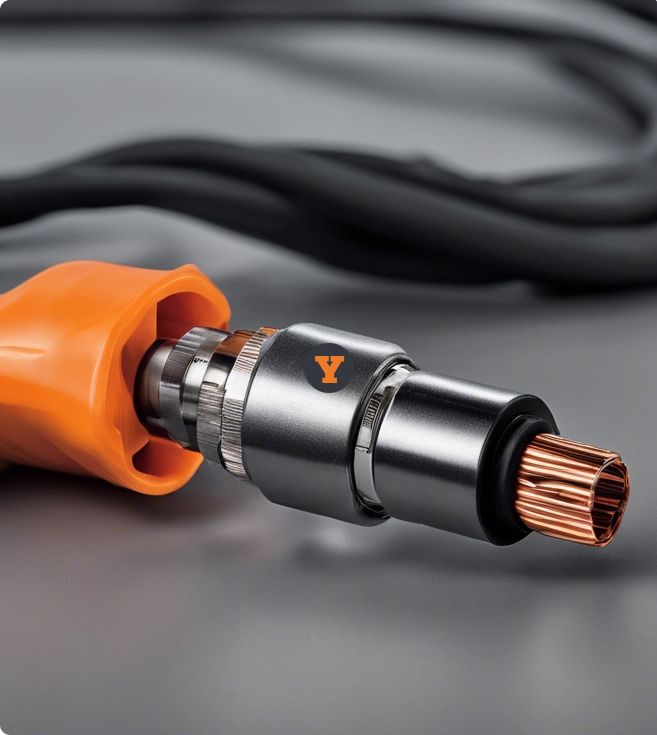
Brass Cable Gland vs. Nylon Cable Gland: Key Differences, Advantages, and Which Is Best for Your Project
Cable glands are essential components in electrical and industrial installations, providing secure cable entry, strain relief, and environmental protection. Among the most widely used types are brass cable glands and nylon cable glands, each with unique properties that affect performance, durability, and cost. Choosing the right type is critical to ensuring safety, compliance, and longevity of your electrical systems.
This comprehensive guide explores the differences between brass and nylon cable glands, their respective advantages and limitations, and practical guidance to help engineers, procurement professionals, and business owners make informed decisions.
1. Understanding Brass Cable Glands
Brass cable glands are metallic glands made from high-quality brass, often nickel-plated to resist corrosion. They are widely used in heavy-duty electrical installations, industrial machinery, and environments with harsh conditions.
Key Features of Brass Cable Glands:
· Material Strength: High mechanical strength; resistant to impact and deformation
· Corrosion Resistance: Nickel-plated brass provides excellent resistance to moisture and chemical exposure
· Temperature Range: Suitable for extreme temperatures, often from -40°C to +120°C
· Environmental Protection: Offers strong sealing against dust, water, and oil (IP68 in many cases)
· Applications: Industrial machinery, outdoor electrical cabinets, marine installations, and hazardous environments
Brass cable glands are preferred in scenarios requiring high mechanical protection and durability, especially when electrical systems are exposed to rough handling, vibration, or outdoor conditions.
2. Understanding Nylon Cable Glands
Nylon cable glands are made from high-strength, flame-retardant nylon (PA66 or equivalent), which is lightweight, cost-effective, and versatile for various electrical applications.
Key Features of Nylon Cable Glands:
· Lightweight and Non-Metallic: Easier to handle, install, and transport
· Corrosion and Chemical Resistance: Resistant to moisture, many acids, alkalis, and oils
· Temperature Range: Generally from -20°C to +80°C (may vary by grade)
· Environmental Protection: Offers IP-rated protection (IP68 or lower depending on design)
· Applications: Indoor installations, automation equipment, control panels, low-voltage machinery, and light-duty industrial environments
Nylon glands are ideal for projects where cost efficiency, ease of installation, and chemical resistance are priorities, and extreme mechanical strength is not critical.
3. Brass vs Nylon Cable Glands: Side-by-Side Comparison
Feature | Brass Cable Gland | Nylon Cable Gland |
Material | Brass, often nickel-plated | Flame-retardant nylon (PA66) |
Mechanical Strength | Very high; resistant to impact and vibration | Moderate; can crack under extreme stress |
Corrosion Resistance | Excellent (nickel plating enhances it) | Good (resistant to water, acids, and alkalis) |
Temperature Range | -40°C to +120°C | -20°C to +80°C |
Weight | Heavy | Lightweight |
Environmental Protection | High (IP68 achievable) | Moderate to high (IP68 achievable) |
Cost | Higher | Lower |
Applications | Outdoor, industrial, marine, hazardous areas | Indoor, control panels, light-duty machinery |
4. Advantages and Limitations
Advantages of Brass Cable Glands
· Superior Mechanical Protection: Withstands high pressure, impact, and vibration
· Long-Term Durability: Resistant to corrosion, heat, and UV exposure
· High-Performance Sealing: Reliable for outdoor and marine environments
· Versatility: Compatible with metal conduits and armored cables
Limitations:
· Heavier and harder to handle for large-scale installations
· Higher cost than nylon
· Requires tools for tightening; overtightening can deform threads
Advantages of Nylon Cable Glands
· Cost-Effective: Lower unit cost, suitable for budget-conscious projects
· Lightweight: Easy to handle, transport, and install
· Chemical Resistance: Effective in acidic or alkaline environments
· Flame Retardant: Provides safety in low-voltage and indoor applications
Limitations:
· Lower mechanical strength; can crack under high stress
· Temperature limitations compared to brass
· Less suitable for armored cables or harsh outdoor conditions
5. Key Considerations When Choosing Between Brass and Nylon Cable Glands
1. Environment and Installation Conditions
· Harsh outdoor, industrial, marine, or high-vibration environments → Brass
· Indoor, controlled, low-stress environments → Nylon
1. Cable Type
· Armored, metal-sheathed, or high-voltage cables → Brass
· Standard low-voltage cables or flexible wires → Nylon
1. Durability Needs
· Long-term reliability and mechanical stress resistance → Brass
· Moderate use with occasional maintenance → Nylon
1. Budget and Project Scale
· Cost-sensitive large-scale projects → Nylon
· Small but high-value critical systems → Brass
1. Safety and Compliance
· Hazardous areas, marine, or outdoor installations requiring IP68 or higher → Brass
· Standard indoor electrical projects with IP65–IP68 → Nylon
6. Common Problems and Solutions
Problem 1: Brass cable gland corrosion in coastal areas
Solution: Use nickel-plated or stainless steel variants; apply anti-corrosion coatings.
Problem 2: Nylon cable glands cracking under over-tightening
Solution: Follow torque specifications; avoid excessive force; use washers if needed.
Problem 3: Moisture ingress in low-quality nylon glands
Solution: Choose high-quality, certified nylon glands with proper sealing rings.
Problem 4: Thread mismatch or poor fit
Solution: Verify cable gland size and thread type before installation (metric, PG, NPT).
7. Business Applications and Market Trends
Brass Cable Glands:
· Preferred in industrial automation, energy, oil & gas, marine, and outdoor electrical infrastructure.
· High reliability and durability make them a standard in safety-critical applications.
Nylon Cable Glands:
· Favored in control panels, indoor machinery, commercial electronics, and HVAC installations where cost, chemical resistance, and ease of installation matter.
Many businesses adopt both types strategically, using brass for high-stress or outdoor areas and nylon for indoor and non-critical applications, achieving cost efficiency and reliability simultaneously.
8. Which Cable Gland Should You Choose?
Question | Brass Cable Gland | Nylon Cable Gland |
Installation environment | Harsh, outdoor, marine | Indoor, low-stress |
Cable type | Armored, metal-sheathed | Standard low-voltage |
Mechanical stress | High | Low to moderate |
Budget | Higher | Lower |
Longevity & durability | Critical | Standard |
Ease of installation | Moderate | Easy |
Summary:
· Brass: Choose for critical, outdoor, or high-stress environments
· Nylon: Choose for cost-effective, indoor, low-stress projects
9. Conclusion
Selecting the right cable gland is essential for ensuring electrical safety, durability, and operational efficiency. Brass cable glands excel in high-stress, outdoor, and industrial environments, offering long-term reliability and superior mechanical protection. Nylon cable glands provide cost-effective, lightweight solutions for indoor, low-stress, and chemically exposed installations.
For businesses seeking high-quality brass and nylon cable glands with global compliance, durable performance, and reliable supply, YDT provides a complete range of cable gland solutions designed to meet diverse industrial and electrical project requirements, helping your installations remain safe and efficient.