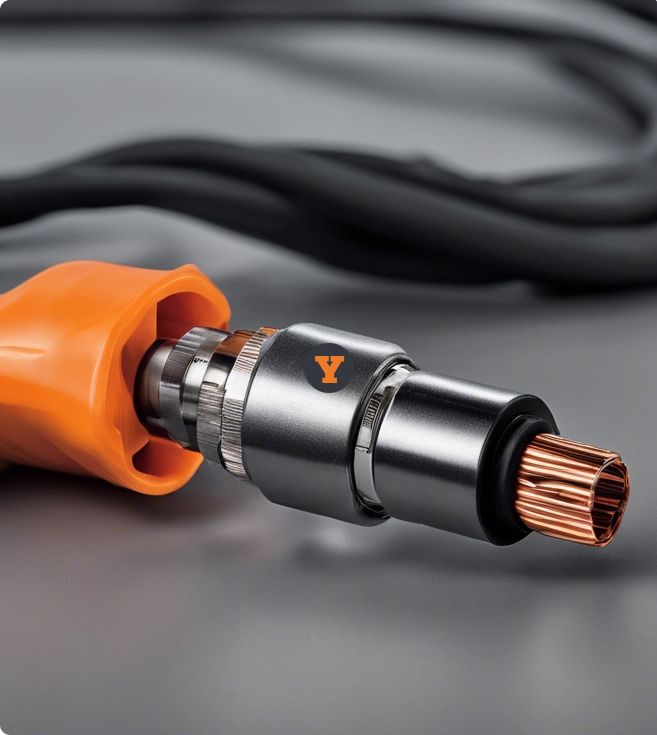
Barrier Cable Glands vs Compression Cable Glands: What's the Difference and Which Should You Choose?
Selecting the correct cable gland is essential for maintaining electrical safety, equipment reliability, and hazardous area compliance. Among the many types available, barrier cable glands and compression cable glands are the two most commonly specified for industrial electrical installations. Although they may appear similar, they are designed for different operating conditions and levels of explosion protection.
Choosing the wrong type can compromise explosion protection, increase maintenance costs, cause inspection failures, and even create serious safety risks in hazardous environments.
This guide explains the key differences between barrier and compression cable glands, compares their construction, applications, installation methods, certifications, advantages, and limitations, and helps engineers, EPC contractors, distributors, and procurement professionals determine which option best suits their projects.

What Is a Barrier Cable Gland?
A barrier cable gland is a specialized explosion-proof cable gland that incorporates a sealing compound or resin to create a flameproof barrier around the individual cable conductors.
Unlike standard cable glands that seal only around the cable's outer sheath, a barrier gland seals the spaces between insulated conductors. This prevents explosive gases or flames from traveling through the cable core into adjacent hazardous areas.
Barrier cable glands are primarily designed for Ex d (Flameproof) electrical equipment installed in high-risk hazardous environments.
Typical applications include:
Oil and gas production facilities
Offshore platforms
Petrochemical plants
LNG terminals
Chemical processing facilities
Refineries
FPSO vessels
Hazardous storage facilities
These industries often require barrier glands because they provide the highest level of explosion containment where flammable gases are continuously or frequently present.
What Is a Compression Cable Gland?
A compression cable gland seals around the cable's outer jacket using one or two compression seals.
Instead of filling the internal conductor spaces with sealing compound, compression glands rely on mechanical compression to achieve environmental sealing and cable retention.Compression cable glands are widely used because they are:
They are commonly used with:
Instrumentation cables
Control cables
Power cables
Communication cables
Compression cable glands are available for both armoured and unarmoured cables and are suitable for hazardous or non-hazardous locations, depending on their certification.
How Do Barrier Cable Glands Work?
Barrier glands include an internal chamber that is filled with a specially formulated sealing compound during installation.
After curing, the compound completely surrounds every conductor, creating a solid explosion barrier.
This design prevents:
Because the barrier is formed around individual conductors rather than only around the cable jacket, the explosion protection level is significantly enhanced.
How Do Compression Cable Glands Work?
Compression cable glands use elastomer sealing rings that compress tightly around the cable's outer sheath.
Depending on the design, they may feature:
Single Compression
The seal is applied only to the cable outer jacket.
Suitable for:
Double Compression
Two independent seals are used:
Double compression cable glands provide:
They are commonly specified for outdoor industrial installations and armoured cables.
Key Differences Between Barrier and Compression Cable Glands
| Feature | Barrier Cable Gland | Compression Cable Gland |
|---|
| Sealing Method | Resin or compound barrier around conductors | Mechanical compression around cable sheath |
| Explosion Protection | Highest level for Ex d applications | Depends on certification and application |
| Gas Migration Protection | Excellent | Limited to outer sheath sealing |
| Installation Time | Longer | Faster |
| Installation Complexity | Higher | Lower |
| Maintenance | Minimal after curing | Easy inspection and replacement |
| Cost | Higher | Lower |
| Typical Applications | Oil & gas, offshore, refineries | General industry, utilities, manufacturing |
The most significant difference is that barrier glands stop gas migration through the cable core, while compression glands primarily seal around the outside of the cable.
When Should You Choose Barrier Cable Glands?
Barrier cable glands are recommended when:
Hazardous Gas Is Present
Facilities containing highly explosive gases require maximum protection.
Examples include:
Hydrogen
Acetylene
Ethylene
Propane
Methane
Ex d Flameproof Equipment Is Installed
Many flameproof enclosures specifically require certified barrier glands.
Always follow equipment manufacturer recommendations.
Project Specifications Require Compound Sealing
Many international oil companies specify barrier glands as mandatory equipment.
This requirement is common in:
High Consequence Facilities
Industries where equipment failure could result in catastrophic incidents often require barrier glands regardless of cost.
When Are Compression Cable Glands the Better Choice?
Compression cable glands are ideal when:
Installation Speed Matters
Large industrial projects may require thousands of cable terminations.
Compression glands significantly reduce installation time.
Hazard Level Is Lower
Many Zone 2 and industrial installations do not require conductor barrier sealing.
Compression glands provide sufficient protection while reducing costs.
Frequent Maintenance Is Expected
Compression glands are easier to remove and reinstall during equipment servicing.
Budget Is a Major Consideration
Compression cable glands generally cost less and require fewer installation materials.
For many applications, they provide excellent performance at a lower total installed cost.
Installation Comparison
Barrier Cable Glands
Typical installation steps include:
Strip cable carefully
Prepare conductors
Mix sealing compound
Fill barrier chamber
Allow curing
Tighten armour clamp
Complete final assembly
Improper compound filling may invalidate certification.
Installation should be performed by trained personnel.
Compression Cable Glands
Installation generally involves:
Strip cable
Position seals
Tighten compression nuts
Verify torque
Installation is faster and requires fewer specialized skills.
Which Industries Prefer Barrier Cable Glands?
Barrier glands are widely specified in:
These industries prioritize maximum explosion protection over installation speed.
Which Industries Commonly Use Compression Cable Glands?
Compression cable glands are frequently installed in:
When certified correctly, compression glands provide reliable performance for a wide range of industrial environments.
Common Misconceptions
"Barrier Glands Are Always Better"
Not necessarily.
While barrier glands provide the highest level of explosion protection, they are not required for every installation.
Using them unnecessarily may increase project costs without providing additional practical benefits.
"Compression Glands Cannot Be Used in Hazardous Areas"
Incorrect.
Many compression cable glands carry IECEx, ATEX, and other hazardous area certifications.
The suitability depends on certification, protection concept, and project requirements.
"Both Types Fit Every Cable"
Different cable constructions require different gland designs.
Always verify compatibility with:
Armoured cables
Unarmoured cables
SWA cables
STA cables
AWA cables
Instrumentation cables
How to Make the Right Choice
Before selecting either type, answer the following questions:
What hazardous area classification applies?
Does the equipment require Ex d protection?
Can explosive gas migrate through the cable?
What cable construction is being used?
Does the project specification require barrier sealing?
Which certifications are mandatory?
What environmental conditions exist?
How often will maintenance be performed?
Is installation speed important?
What is the total lifecycle cost?
Evaluating these factors ensures the selected cable gland meets both safety requirements and operational objectives.
Final Thoughts
Barrier cable glands and compression cable glands each serve an important role in industrial electrical systems, but they are designed for different levels of protection and application requirements. Barrier cable glands provide superior flameproof sealing by preventing gas migration through cable conductors, making them the preferred choice for high-risk Ex d installations such as offshore platforms, refineries, and petrochemical facilities. Compression cable glands, on the other hand, offer faster installation, lower costs, and dependable environmental sealing, making them ideal for many general industrial and certified hazardous-area applications.
Understanding the differences in sealing method, certification, cable compatibility, installation process, and project requirements allows engineers and procurement teams to choose the most appropriate solution for long-term safety, compliance, and performance.
Need Expert Advice on Choosing the Right Cable Gland?
Whether your project requires high-performance barrier cable glands for critical flameproof applications or durable compression cable glands for industrial power and instrumentation systems, YDT offers reliable solutions designed to meet international standards. With a wide selection of materials, thread types, cable configurations, and hazardous-area certifications, we help customers select cable glands that deliver long-term safety, dependable sealing performance, and efficient installation.
Contact YDT today for professional technical support, customized product recommendations, or assistance with selecting the right cable gland for your next hazardous-area project.