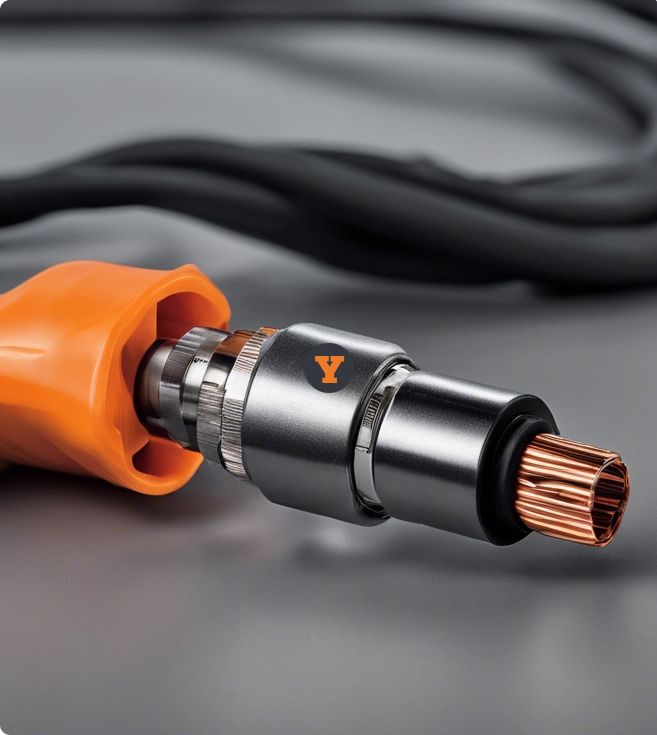
Ordering an armored flexible conduit based only on nominal diameter and price can easily lead to installation problems.
Two conduits that appear similar may differ significantly in metal construction, outer coating, temperature capability, bending performance, connector compatibility, and suitability for water, oil, vibration, or mechanical impact.
For industrial machinery, automation equipment, electrical installations, transportation systems, and other demanding environments, the conduit should be treated as part of the complete cable-protection system.
Before requesting a quotation for an armored flexible conduit, confirm the following eight specifications.
1. Conduit Material and Construction
Start by identifying exactly how the conduit is constructed.
Common armored flexible conduit designs include:
Galvanized steel flexible conduit
PVC-coated galvanized steel conduit
Metal conduit with an external protective sheath
Uncoated flexible metal hose
The correct construction depends on the environment.
An uncoated galvanized metal conduit may be suitable for protected indoor machinery where mechanical protection and flexibility are the primary requirements.
A PVC-coated metal conduit is often more appropriate where the conduit may encounter moisture, dust, abrasion, oil mist, or general environmental exposure.
Before ordering, ask the supplier to confirm:
Do not simply specify “metal flexible conduit.” The exact construction affects corrosion resistance, flexibility, temperature performance, and service life.
2. Internal Diameter, External Diameter, and Cable Fill
Nominal conduit size is not enough to confirm cable compatibility.
Industrial buyers should check both the inside diameter (ID) and outside diameter (OD).
The inside diameter determines how much cable can actually pass through the conduit, while the outside diameter affects connector selection, mounting space, and routing.
Before choosing a size, calculate:
Number of cables
Outside diameter of each cable
Total cable bundle size
Required installation clearance
Applicable cable-fill requirements
Potential future cable additions
Avoid choosing a conduit whose internal diameter is almost the same as the cable bundle.
Even if the cables technically fit, pulling them through several bends may become difficult and can place unnecessary stress on the cable insulation.
For multi-cable installations, base the selection on cable cross-sectional area and applicable electrical installation requirements rather than simply adding the individual cable diameters.
A useful RFQ should therefore specify both the cable dimensions and required conduit size.
3. Continuous and Short-Term Temperature Rating
Temperature capability is especially important for coated armored conduit.
Always distinguish between:
Continuous operating temperature:
The temperature range the conduit can tolerate during normal long-term operation.
Short-term or peak temperature:
A higher temperature the conduit may withstand temporarily.
These figures should never be treated as interchangeable.
Consider the actual temperature at the conduit location, especially around:
The temperature around the cable route may be much higher than the general room temperature.
For coated conduit, excessive temperature can affect the outer sheath before it affects the metal structure itself.
Your purchase specification should therefore state minimum temperature, maximum continuous temperature, and any expected short-duration temperature peaks.
4. Minimum Bend Radius and Flexibility
One reason to use armored flexible conduit instead of rigid conduit is easier routing around machinery and equipment.
However, “flexible” does not mean the conduit can be bent to any radius.
An excessively tight bend can:
Deform the metal structure
Reduce the internal cable space
Increase cable pulling force
Stress the external coating
Damage cable insulation
Place additional load on the connector
Before ordering, confirm the minimum recommended bend radius.
You should also compare it with the cable manufacturer's minimum bend radius.
If the cable requires a larger radius than the conduit, the cable requirement normally determines the installation geometry.
This specification is particularly important for control cabinets, compact machines, robotic equipment, packaging machinery, and other installations with limited routing space.
5. Mechanical Protection Requirements
Armored conduit is selected primarily because cables require greater mechanical protection.
However, the expected mechanical load should be defined more precisely.
Ask what the conduit needs to withstand:
A conduit used beside a stationary control cabinet does not face the same mechanical conditions as one installed on vibrating production equipment.
It is also important to distinguish between flexibility during installation and continuous dynamic flexing.
A conduit suitable for routing around machinery may not automatically be suitable for millions of repeated bending cycles on a robotic arm or continuously moving machine axis.
For high-cycle dynamic applications, request specific bending-cycle or fatigue information rather than assuming that any flexible conduit is suitable.
6. Water, Oil, Dust, UV, and Chemical Exposure
Avoid using a vague requirement such as “suitable for harsh environments.”
Instead, identify exactly what the conduit will contact.
For example:
| Environment | Important Factors to Confirm |
|---|
| Outdoor equipment | Water, UV, temperature cycling |
| CNC machinery | Oil, metal chips, vibration |
| Factory automation | Abrasion, vibration, dust |
| Food equipment | Water, cleaning agents |
| Transportation | Vibration, moisture, temperature changes |
| Chemical equipment | Specific chemical compatibility |
A PVC outer layer can provide additional environmental protection, but that does not mean it is universally resistant to every solvent, oil, acid, alkali, or cleaning chemical.
If chemical exposure is expected, provide the supplier with the actual substance rather than simply requesting “chemical-resistant conduit.”
For applications where heavy mechanical protection is not required but corrosion resistance and low weight are more important, plastic flexible conduits may also be worth comparing.
7. Connector Size, Angle, Thread, and Protection Level
Conduit and connector selection should happen at the same time.
A technically suitable conduit can still cause installation problems if the connector does not match the conduit diameter or equipment entry thread.
Before placing the order, confirm four things.
Connector Size
The connector must match the selected conduit OD or corresponding hose size.
Connector Direction
Depending on equipment layout, you may need:
Straight connector
45-degree connector
90-degree connector
Angled connectors can reduce routing space and help avoid forcing the conduit into an excessively tight bend.
Thread Standard
Industrial electrical equipment may use different thread systems, including:
Never assume that similarly sized threads are interchangeable.
Check the actual female or male thread on the motor, enclosure, junction box, control cabinet, or other equipment before ordering.
You can review the available conduit connectors and fittings together with the conduit instead of treating them as separate purchases.
Environmental Protection
If the installation requires a particular IP level, verify what component or assembly the rating applies to.
The final environmental protection depends not only on the conduit but also on the connector, seal, thread engagement, enclosure, and installation method.
8. Length, Compliance, and Custom Requirements
The final specification involves how the conduit will actually be supplied.
Before issuing a purchase order, confirm:
Standard coil length
Required cut length
Quantity
Packaging method
Required color
Connector configuration
Applicable certifications
Required test reports
Market-specific standards
Drawing or dimensional requirements
OEM or customized specifications
For machine builders, repeated cut lengths may be more convenient than purchasing long coils and cutting every piece during assembly.
For bulk procurement, dimensional consistency between production batches is also important because variations in conduit OD can affect connector assembly and installation efficiency.
If the product will be used in a regulated industry or exported to a specific market, request the required compliance documents before approving the order rather than after production.
What Information Should You Send With an RFQ?
A good armored flexible conduit RFQ does not need to be complicated, but it should include enough information for accurate product selection.
A practical inquiry can contain:
Application: Industrial motor connection
Installation: Indoor machinery
Cable quantity: 4 cables
Cable OD: 8 mm each
Environment: Oil mist, vibration, occasional water splash
Temperature: 0°C to 60°C continuous
Conduit requirement: PVC-coated metal flexible conduit
Connector: 90°
Thread: M25
Length: 1.2 m per assembly
Quantity: 500 pieces
Additional requirement: Matching connectors and compliance documents
This is much more useful than simply asking:
“Please quote 25 mm armored conduit.”
The more accurately the operating conditions are defined, the easier it is to avoid overspecification or selecting a conduit that cannot meet the actual application.
Final Buying Checklist
Before approving your armored flexible conduit order, confirm these eight items:
Material and construction – metal type, coating, and structure
ID and OD – cable capacity and connector compatibility
Temperature rating – continuous and short-term limits
Bend radius – conduit and cable bending requirements
Mechanical protection – impact, crushing, abrasion, and vibration
Environmental resistance – water, oil, UV, dust, and chemicals
Connector and thread – size, angle, thread type, and sealing requirement
Supply specification – length, quantity, compliance, and customization
Confirming these details before purchasing reduces installation problems, prevents connector mismatches, and makes supplier quotations easier to compare on the same technical basis.
For industrial OEMs, equipment manufacturers, electrical contractors, and bulk buyers sourcing complete cable-protection solutions, YDT provides armored flexible conduits together with compatible conduit fittings and customization support. Send your cable dimensions, operating environment, temperature range, required conduit size, connector thread, length, and purchasing quantity to YDT for product selection, samples, and quotation support.